I. Introduction
Nowadays, “Senior Living” search doesn’t start with a phone call; it starts with a deep dive. Today’s prospects—primarily tech-savvy Boomers and their Gen X adult children—are more research-oriented than ever. They aren’t just looking for a facility; they are looking for a community that feels like an upgrade to their current lifestyle. We’ve covered some of these aspects in our ”Assisted Living Marketing: The Definitive Guide for Increasing Occupancy” blog post.
For community leadership and management companies, the challenge has shifted. High demand across the industry is a double-edged sword. While the leads are coming in, the “research-heavy” buyer journey means that a simple “Schedule a Tour” button is no longer a sufficient conversion tool. Families are usually navigating what we can call the “anxiety arc”—a period of high stress, guilt, and financial questioning when thinking about senior living.
To win in this environment, you have to move beyond vanity metrics. It isn’t about how many leads you generated this month; it’s about connection, empathy and also move-in velocity.
The most successful management companies are abandoning fragmented, “siloed” marketing tactics. Instead, they are adopting an integrated, data-driven strategy. By leveraging sophisticated tools like HubSpot, they can track a prospect’s digital footprint, provide value at the exact moment of need, and ultimately turn a cautious inquiry into a confident move-in.
In this guide, we’ll explore 10 high-impact marketing ideas designed to build trust, reduce friction, and fill your units faster.
II. 10 High-Impact Marketing Ideas
1. Hyper-Local “Trusted Neighbor” Content
Prospects are wary of “corporate” vibes. They want to know that your community isn’t just in the city, but part of it. Instead of publishing generic articles about “The Benefits of Senior Living,” pivot to hyper-local storytelling.
- The Strategy: Create guides centered on the specific neighborhood, such as “The 5 Best Accessible Walking Trails in [City Name]” or “A History of the [Local Landmark] District.” Partner with local clinics or nearby churches for guest segments.
- The Tracking Advantage: Don’t let this content live in a vacuum. Use CRM tools, like HubSpot to track which local topics are driving inquiries. By seeing which zip codes interact with your “Trusted Neighbor” content, you can direct your physical mailers and local event spend with surgical precision.
2. The “Nostalgia” Experience Campaign
The decision-makers are often Gen X adult children who are deeply influenced by emotional connection. A “Nostalgia” campaign focuses on the cultural touchstones that make your community feel like home, rather than a clinical environment.
- The Strategy: Host “Vinyl and Vines” nights or digital galleries featuring local history from the 60s and 70s. Show potential residents (and their kids) that life in your community is a continuation of their story, not a final chapter.
- The Goal: Shift the narrative from “clinical care” to “lifestyle enrichment.” When you lead with empathy and shared history, you lower the defensive “anxiety arc” of the prospect.
3. Short-Form Video Storytelling (Meta, Insta & More)
Authentic, raw, and unscripted short-form video is a very good converting medium for any company these days.
- The Strategy: Use Instagram Reels and other Meta apps to showcase “Day-in-the-Life” snippets. Feature a resident’s morning coffee routine, a 30-second interview with the head chef, or a staff member sharing why they love their job.
- The Impact: These “micro-moments” build massive trust. They allow a family to see the faces and hear the voices of the people who will be caring for their loved ones, humanizing the brand and stripping away the “institutional” stigma before they even step foot on property.
4. “Life-Event” Triggers vs. Seasonal
The move-in process is usually triggered by a specific life event rather than a season. Most communities create content based on seasonal events like New Years, Christmas, etc. Don’t be locked into it.
- The Strategy: You can create content that signifies a crisis or a realization point—using context like “safety after a fall,” “home care vs. senior living,” or “signs it’s time for memory care.”
- The Goal: Position your community as the immediate answer to a sudden problem. By showing up exactly when a family realizes their current situation is unsustainable, you significantly shorten the sales cycle.
5. Transparent Pricing & Financial Planning Tools
Cost is the #1 reason prospects ghost your sales team. Hiding your rates behind a “call for pricing” wall only creates frustration and leads to high bounce rates.
- The Strategy: Be the brand that simplifies the math. Include cost calculators, “How to Pay” guides, and side-by-side comparisons of home ownership costs vs. community living.
- The HubSpot Connection: This is where you separate the “lookers” from the “buyers.” Pro-Tip: Gate these financial tools with a form. When a prospect enters their data to get a custom pricing estimate, your CRM tool immediately segments them by their financial readiness, allowing your sales team to prioritize follow-ups with highly qualified leads.
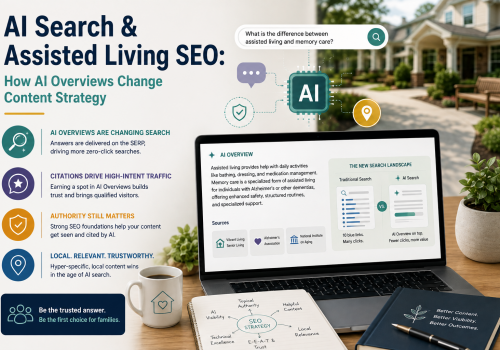
6. AI-Powered “Answer Engine” Optimization (AEO)
The way people search has changed. Families are now asking complex questions to AI tools like ChatGPT or Gemini, such as, “What are the best boutique assisted living options in North Dallas for veterans?”
- The Strategy: Structure your website’s FAQ and blog content using schema markup and conversational language. You want to be the “source of truth” that these AI models pull from when they generate answers for prospects.
- The Impact: By optimizing for Answer Engines, you capture traffic from the growing segment of users who no longer click on traditional blue-link search results, keeping your community top-of-mind in the AI era.
7. Resident & Family “Brand Ambassador” Programs
In senior living, social proof is the ultimate currency. A prospective family might take a marketing director’s words with a grain of salt, but they will trust a peer implicitly.
- The Strategy: Formalize your referral process. Identify families and residents who are thriving and empower them to be “ambassadors.” Feature them in video testimonials that don’t just praise the food, but specifically address the “tough” objections—like the fear of losing independence or the guilt of moving a parent.
- The Tracking: Use your digital systems to track these referrals. When a “Brand Ambassador” video is watched on your site, ensure that engagement is tagged in the prospect’s profile so your sales team knows exactly which success story resonated with them.
8. Virtual “Choreographed” Tours
With adult children often living in different states, the “initial tour” is increasingly happening behind a screen. A simple link to a 3D tour isn’t enough; it needs to be an experience.
- The Strategy: Use high-fidelity 3D tours as a live sales tool. Instead of sending a link, host a “guided virtual walk-through” via video call. This allows the sales counselor to highlight specific amenities—like the art studio or the courtyard—based on the prospect’s interests.
- The HubSpot Insight: By integrating your tour platform with your CRM, you can see exactly which rooms or common areas a prospect lingered on during their independent viewing. If they spent three minutes looking at the fitness center, your follow-up email should focus on your wellness programs.
For more informational content on this matter, you can also check our Definitive Guide for Tour-Driven Websites.
9. Educational Webinar Series for Solo Agers
“Solo Agers”—seniors who do not have children or a local support system—are a rapidly growing demographic in the US. Their needs are different; they aren’t looking for a “care” solution for a parent, they are looking for a “safety net” for themselves.
- The Strategy: Host a webinar series specifically for this group, focusing on topics like “Legal Planning for Solo Agers” or “How to Choose a Community When You’re Doing it Alone.”
- The Automation: Use CRM workflows to manage the entire lifecycle of the webinar. From the initial sign-up to the “Thanks for attending” email and the eventual “Ready to visit?” nudge, automation ensures that these high-intent leads never fall through the cracks during their long research phase.
10. The “Always-On” Prospect Self-Enablement Suite
The “black hole” of weekend inquiries is where move-ins go to die. If a family reaches out during a crisis on a Saturday night and doesn’t get a response until Monday morning, they have already moved on to your competitor. Instead of relying on manual “rapid response,” empower the prospect to move themselves down the funnel.
- The Strategy: Integrate instant scheduling calendars or widgets dedicated specifically for scheduling like “Talk Further” directly into your high-intent pages. If a prospect is looking at a floor plan or pricing, give them the power to book a tour or a 15-minute discovery call right then and there via an embedded HubSpot calendar.
- The Advantage: This removes the “middleman” friction. By providing a self-service way to commit to a tour, you capture the prospect’s peak emotional intent. Even if your sales office is physically closed, your “digital front door” is wide open and actively filling your tour calendar.
III. The Secret Sauce: Data-Driven Management
For a management company overseeing multiple communities, the challenge isn’t just getting leads—it’s having a Unified Truth across the entire portfolio. This is where a high-performance CRM like HubSpot becomes your most valuable asset.
The Unified Journey
Management needs to see the full “anxiety arc.” CRM tools allow you to track a prospect from the very first time they clicked a Facebook ad, through every blog they read, to the moment they walked through the front door. This visibility allows you to prove marketing ROI and identify exactly where prospects are dropping out of the funnel.
Behavioral Lead Scoring
Not all leads are created equal. With behavioral scoring, your sales teams don’t have to guess who to call first.
- Low Score: Someone who just downloaded a “Healthy Recipes” guide. (Keep them in a nurture workflow).
- High Score: Someone who has visited the “Floor Plans” page three times and opened the “Pricing Guide” in the last 24 hours. (Call them immediately).
Nurture Automation for the “Long-Tail” Prospect
The average senior living lead takes months, not days, to convert. You cannot expect your sales counselors to manually follow up with hundreds of “maybe later” prospects. CRM workflows handle the heavy lifting by sending personalized, empathetic content over 12–18 months, keeping your community top-of-mind until the family is finally ready to make the move.
IV. Conclusion
Increasing move-ins requires a delicate balance: high-tech automation to manage the data and high-touch empathy to manage the family’s emotions.
For community management companies, marketing should never be viewed as a mere line-item expense. When executed with a data-driven mindset and the right CRM infrastructure, it becomes a predictable engine for revenue and occupancy growth.
If your management team is tired of seeing high lead volume that doesn’t translate into occupancy, it’s likely not a lead problem—it’s a process problem. In today’s market, your CRM shouldn’t just be a digital Rolodex; it should be your most effective sales closer.
At DIGITAL& we specialize in helping senior living companies bridge the gap between marketing and operations. Whether you need to optimize your CRM portal for better lead scoring or build a hyper-local content engine that actually converts, we have the expertise to scale your occupancy across your entire portfolio.
Ready to see the “Secret Sauce” in action?
Schedule a FREE Discovery Call with DIGITAL& today. We’ll dive into your current setup and identify the exact friction points where you might be losing prospects.
FAQ
What is the most effective way to market senior living communities today?
The most successful approach abandons fragmented tactics in favor of an integrated, data-driven strategy. Effective marketing now focuses on reducing the prospect’s “anxiety arc” through empathy and connection. High-impact ideas include using hyper-local “Trusted Neighbor” content, “Nostalgia” campaigns that appeal to Gen X adult children, and “Life-Event” triggers that address specific crises rather than just seasonal holidays.
Should senior living communities list prices online?
Yes. Cost is the number one reason prospects stop communicating with sales teams. Rather than hiding rates, communities should act as a brand that simplifies the math by including cost calculators and “How to Pay” guides. This transparency builds trust and helps separate serious buyers from casual lookers, allowing the CRM to segment leads based on financial capability.
How can I schedule a senior living tour outside of business hours?
Modern communities are adopting “Always-On” prospect self-enablement suites. Instead of waiting for a callback on Monday, you should look for communities that offer instant scheduling widgets or calendars directly on their websites. This “digital front door” allows families to book a tour or a discovery call immediately, capturing their interest at the moment of highest intent.
How does behavioral lead scoring work for senior living sales?
Behavioral lead scoring uses CRM tools to track a prospect’s digital footprint and assign value to their actions. It ensures sales teams don’t have to guess who to call. For example, a “low score” might be assigned to someone downloading a recipe, while a “high score” is given to someone who visited the floor plans and pricing pages recently, indicating they are ready for immediate follow-up.
What is the difference between a standard virtual tour and a “choreographed” tour?
A standard virtual tour is often just a link to a 3D view that a user clicks through alone. A “choreographed” tour is a live sales tool where a counselor hosts a guided video walk-through. This experience allows the staff to highlight specific amenities based on the prospect’s interests and permits the CRM to track exactly which areas the prospect lingered on for better follow-up.